Workplace wellbeing
Occupational health at your company: where active breaks and ergonomics fit within the program
Occupational health is not only hard hats and fire extinguishers. At the office, posture, sedentary time, and stress are part of daily care too.
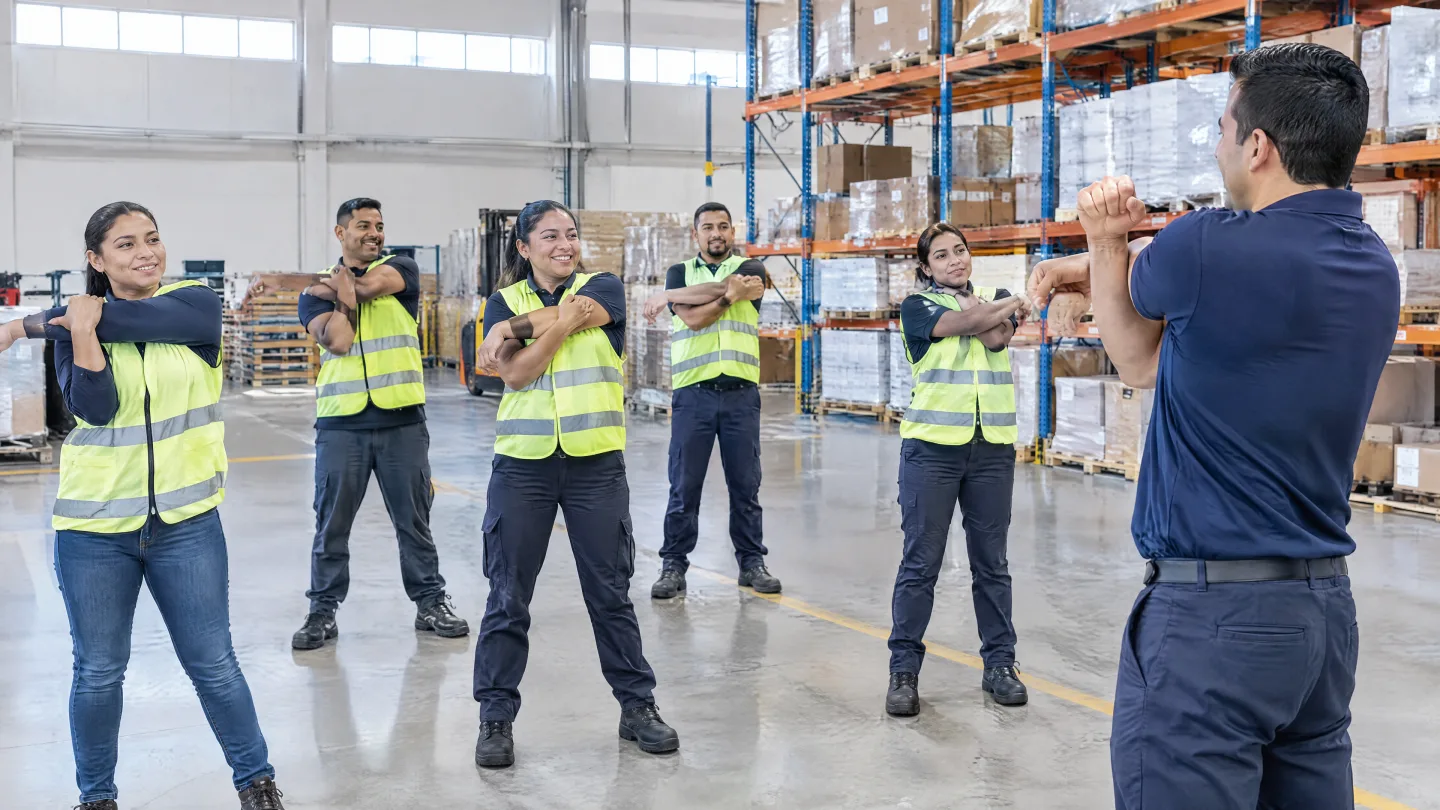
When people talk about occupational health, many picture hard hats, safety vests, and fire extinguishers. That part is essential, especially in warehouses, plants, and construction sites. But an office, a call center, or a bank branch also has everyday risks: long hours of sitting, repetitive movements, poorly placed screens, and built-up stress.
That is where active breaks and ergonomics find their place within a company's occupational safety and health program.
What an occupational health program covers
Each company organizes it according to its activity, its size, and the regulations that apply to it; that framework is defined by each organization's safety and health leads. In general terms, a program usually includes:
- Risk identification: physical, chemical, ergonomic, and psychosocial, depending on the type of work.
- Prevention: measures to reduce those risks at the workstation and in how work is organized.
- Training: making sure the team knows how to look after themselves in their daily tasks.
- Follow-up: reviewing indicators, listening to the team, and adjusting.
Ergonomic risk, the office's great invisible one
Ergonomic risk is about the relationship between a person, their workstation, and their task. It makes no noise and is not obvious at a glance, but it shows up as loaded backs, tense necks, and tired wrists at the end of the day. Some common sources:
- Sedentary time: spending hours without getting up from the chair.
- Awkward postures: low screens, poorly adjusted chairs, laptops without a stand.
- Repetitive movements: typing, using a mouse, scanning products, or packing.
- Physical loads: lifting boxes or moving goods in warehouses and stores.
Where active breaks fit in
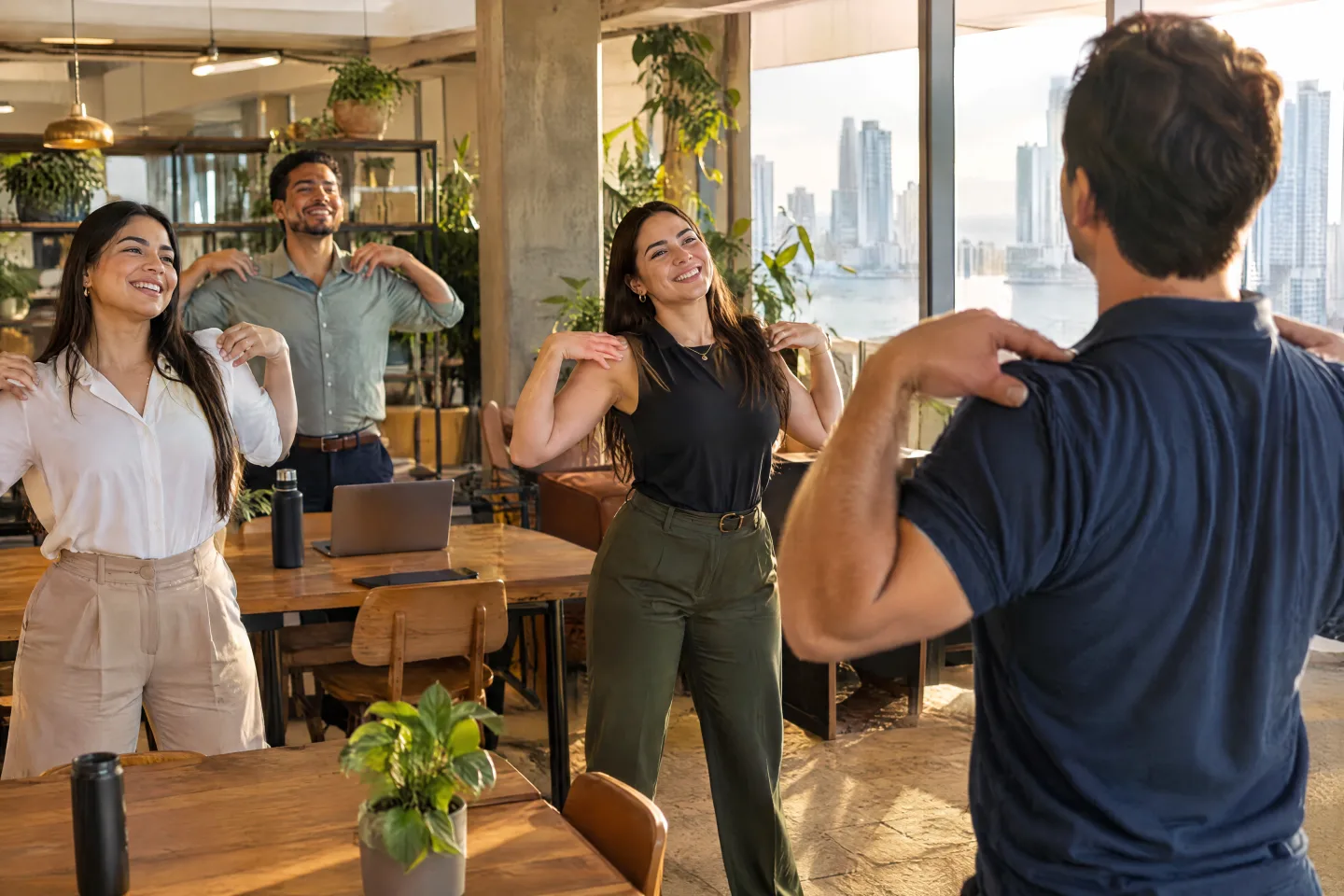
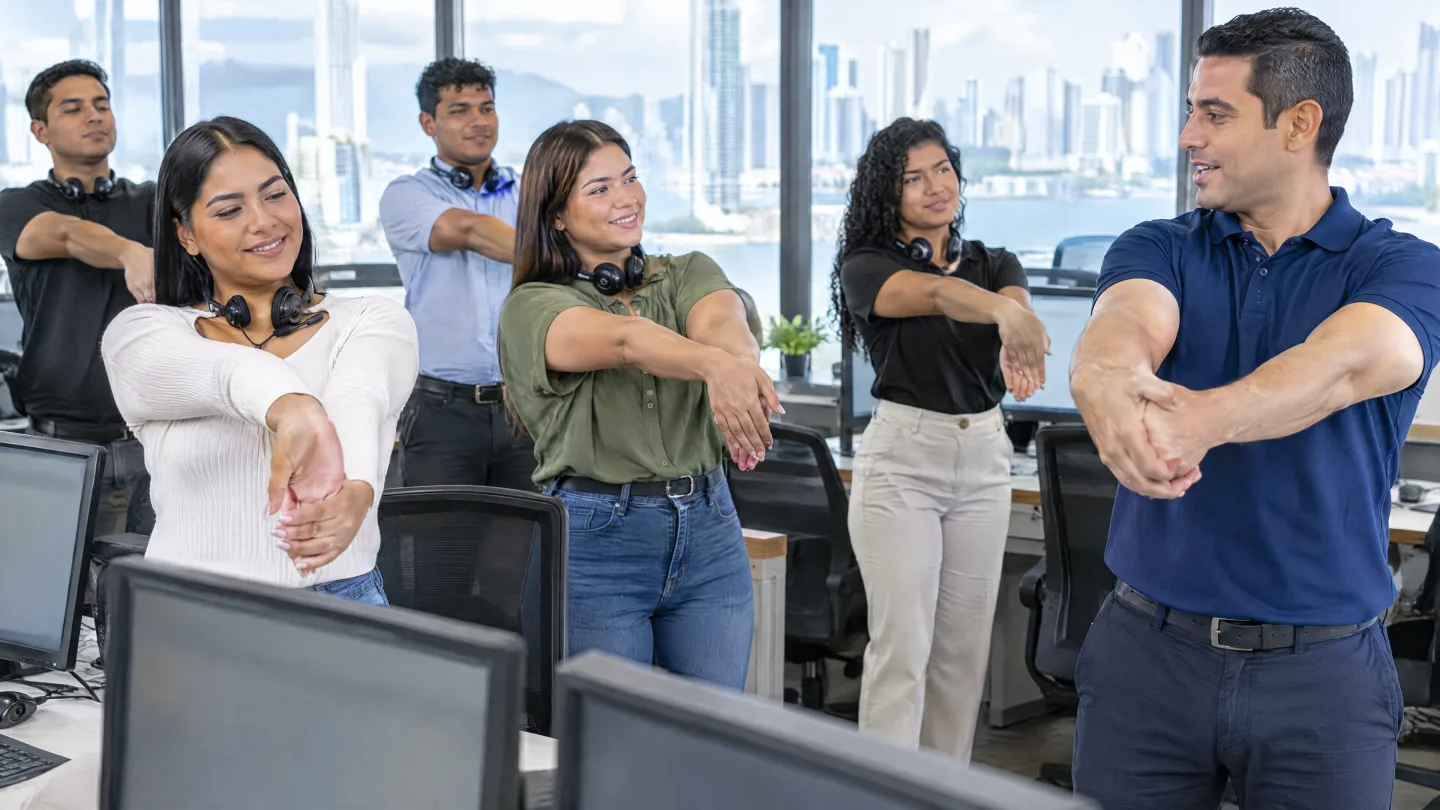
Active breaks are a practical prevention tool: they interrupt sitting time or repetitive tasks, bring movement back to the body, and create a team moment. For them to truly add to the program, it helps if they are:
- Regular: several times a week or daily, not just on a special date.
- Adapted: warehouse movements are not the same as call center movements.
- Guided at first: an instructor teaches the technique so the team can repeat it later.
- Built into the schedule: backed by managers so they do not feel like "wasted time."
An active break does not replace a good workstation, and a good workstation does not replace movement. Together they work better.
Practical ergonomics at the workstation
Alongside breaks, small adjustments at each workstation make a difference: chair height, screen at eye level, keyboard and mouse close to the body, feet supported, and good lighting. A guided, person-by-person review often reveals simple changes nobody had noticed.
Do not forget the psychosocial side
Work stress is also part of health at work. Breathing spaces, stress-management workshops, and a culture that allows people to pause help the program care for the whole person, not just their posture.
How THA can support you
THA supports Human Resources and safety and health teams with occupational health and ergonomics programs, guided active breaks adapted to each type of operation, and other corporate wellness experiences in Panama. We add to your program; we do not replace it.